





Sam Altman Just Dropped the Blueprint for AI’s Nuclear Moment
The era of “Abundant Intelligence” isn’t coming—it’s here, and it’s about to change everything.
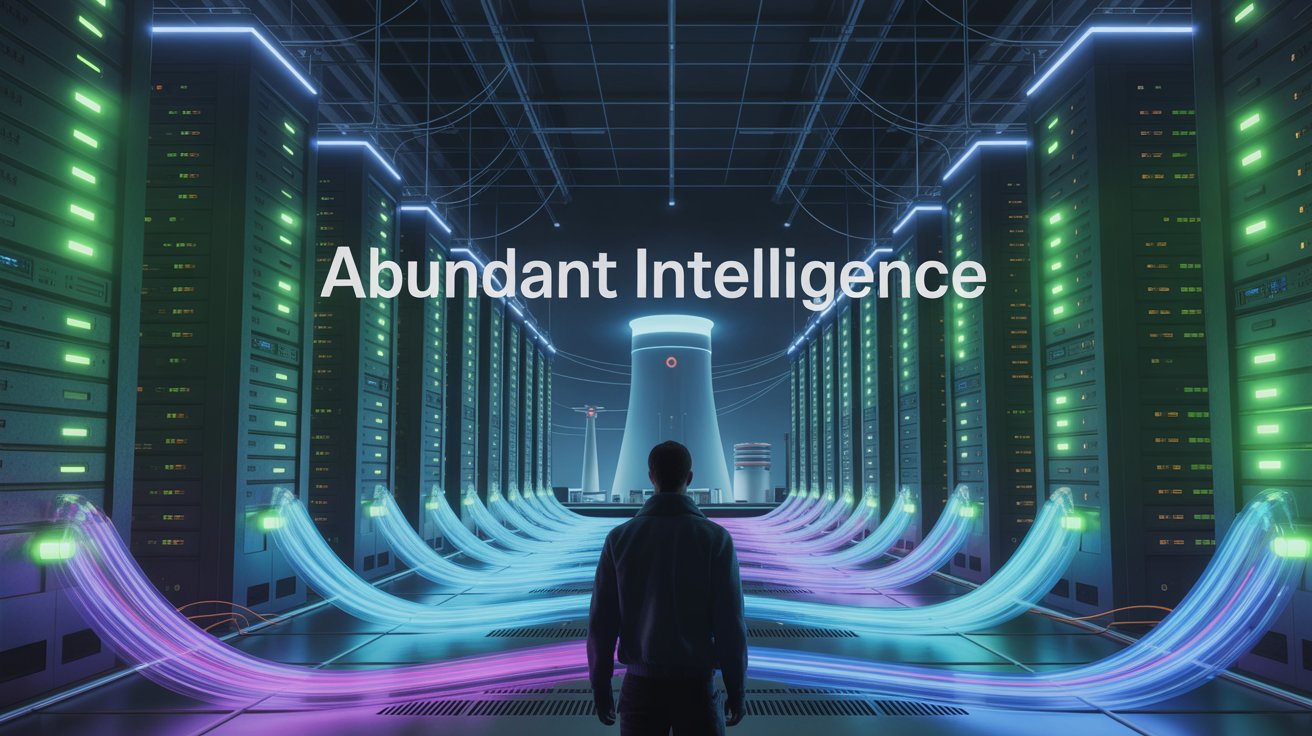
Sam Altman just published a blog post that should make every tech executive, entrepreneur, and AI enthusiast sit up and pay attention. Titled “Abundant Intelligence,” OpenAI’s CEO outlined a plan so ambitious it sounds like science fiction: building infrastructure that can pump out 1 gigawatt of AI capacity every single week.
To put that in perspective, we’re talking about the output of an entire nuclear reactor—dedicated purely to AI compute power. Every. Single. Week.
Why This Matters More Than You Think
Here’s the thing most people are missing: we’re not just talking about faster ChatGPT responses or smoother AI tools. Altman’s vision tackles the biggest bottleneck in AI development—compute scarcity.
Right now, AI development is like trying to cure cancer with a calculator. The ideas are there, the talent exists, but we’re constantly hitting walls because there simply isn’t enough computational power to go around.
Think about it this way: if AI compute remains limited, society faces impossible choices. Do we allocate precious resources to develop AI that could cure cancer? Or do we focus on creating personalized AI tutors for every student on the planet? These shouldn’t be either-or decisions in 2025.
The Gigawatt Factory Revolution
Altman’s solution is beautifully straightforward: treat AI infrastructure like a factory production line. Instead of one-off data center builds, OpenAI wants to create a repeatable system that adds gigawatt-scale capacity on a weekly schedule.
This isn’t just about buying more GPUs. We’re talking about:
- Advanced chip manufacturing at unprecedented scales
- Power infrastructure that can handle massive energy demands
- Data centers designed for maximum efficiency
- Cooling systems that work 24/7 without breaking down
- Teams of specialists keeping everything running smoothly
The economic model creates what Altman calls a “flywheel effect”: more compute power enables better AI applications, which generates more revenue, which funds even more infrastructure development. It’s a virtuous cycle that could accelerate AI democratization beyond anything we’ve seen.
Enter “Stargate”—The Infrastructure Moonshot
Here’s where things get really interesting. Reports are connecting Altman’s vision to something called the “Stargate” project—a massive infrastructure buildout involving partners like Oracle and SoftBank across the United States.
We’re talking about mind-bending budgets and approximately 10 gigawatts of total capacity. That’s enough computational power to train, deploy, and run next-generation AI models for everyone who needs them, not just tech giants with deep pockets.
The timeline is aggressive: convert massive capital investments into compute infrastructure through new campuses, major power agreements, and chip procurement deals—all on repeat, over and over, until the infrastructure matches global demand.
What This Means for Your Future
If this flywheel starts spinning at full speed, we could see the emergence of what I’m calling the “Intelligence Grid”—a network of AI capacity that hums with on-demand intelligence, eliminating those frustrating “sorry, we’re at capacity” messages that plague current AI services.
The implications are staggering:
- Scientific breakthroughs could accelerate exponentially
- Education becomes truly personalized for every learner
- Creative tools become accessible to anyone with an idea
- Complex global challenges get both human insight and unlimited computational power
By 2026, we might be using AI applications that feel genuinely magical—not because the technology is mystical, but because the infrastructure finally matches our ambitions.
The Race Is On
Here’s the bottom line: we’re witnessing a fundamental shift from AI scarcity to AI abundance. The companies, countries, and individuals who understand this transition will have a massive advantage in the coming decade.
This infrastructure buildout isn’t just about OpenAI’s business model—it’s positioning AI development as a national and economic priority. We’re talking about massive capital investments creating entirely new industries, job categories, and technological capabilities that could define the next ten years of human progress.
The race is simple to explain but crazy to execute: turn money into compute power faster than anyone else, then use that advantage to build even more compute power. If successful, we’ll look back on 2025 as the year AI became as fundamental as electricity.
Want to see me break down the full implications of Sam Altman’s “Abundant Intelligence” vision? Head over to my YouTube channel in the next few days for an in-depth video analysis of how this massive infrastructure shift could reshape the future of AI accessibility and what it means for your business, career, and daily life!