


Imagine firing up GPT-5.2, OpenAI’s shiny new brainiac, only to hit a wall if you’re in China—thanks to ongoing US export controls and access blocks. Launched December 11, 2025, this latest AI powerhouse promises mega-reasoning, but geopolitical fences keep ChatGPT fans there scrambling for local fixes. Ready to unpack the buzz?
Key Takeaways
-
- Tiered smarts: Routes queries to Instant, Thinking, or Pro modes for perfect-fit responses, slashing errors by 38% over GPT-5.1.
- Benchmark beast: Hits 98.7% on MRCRv2 long-context and 70.9% GDPval for expert-level wins.
- China catch: No direct access due to US restrictions, pushing users to homegrown alts like Ernie or Qwen.
- Cost cutter: Cached inputs at 90% off ($0.175/M tokens), ideal for repetitive tasks.
- Agent magic: Collapses multi-agents into one ‘mega-agent’ for pure workflow wizardry.
- Science edge: Tops GPQA Diamond and derives physics formulas internally.
- Long-haul thinker: METR eval clocks 6h34m at 50% time horizon.
What it is
GPT-5.2 is OpenAI’s tiered model family—Instant for quick hits, Thinking for deeper dives, Pro for extreme reasoning. Think of it as a smart router picking the right brainpower for your query, succeeding GPT-5.1 with state-of-the-art benchmarks.
Dropped in December 2025, it’s built on NVIDIA/Microsoft scale for chain-of-thought via Responses API.
But here’s the twist: While the world geeks out, China faces blocks, echoing past ChatGPT shutdowns.
Core features and why they matter
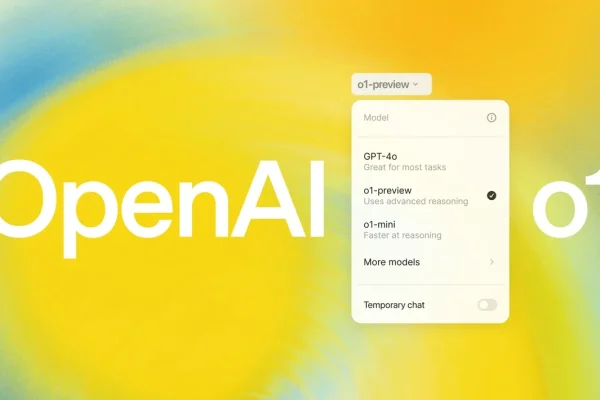
Three tiers handle everything from snaps to marathons. Instant zips basics; Thinking adds xhigh effort; Pro tackles beasts like ARC-AGI-2 at 52.9-54.2%.
Why care? 42% better code scans, response compaction over 400K tokens, and RLHF on edge cases mean fewer human checks in pro workflows.
For China users, it’s a tease—US chip curbs and API halts force local pivots.
How it works in practice
-
- Query hits GPT-5.2; system routes to tier (e.g., Pro for complex math).
- Leverages cached inputs for repeats, saving 90% costs.
- Outputs via compacted responses, enabling mega-agent flows—like one AI juggling tasks autonomously up to 55min at 80% horizon.
Picture debugging code: It scans, reasons, fixes—30% faster POCs. Simple, right?
Use cases with concrete examples
-
- E-commerce: Pro mode optimizes pricing via GDPval smarts, beating rivals.
- Creative: Thinking derives physics preprints or gluon formulas for sci-fi plots.
- Social: Instant crafts viral posts; cached prompts keep branding consistent cheap.
China devs? Migrating to GLM-4 with free tokens as OpenAI walls up.
Pros and cons
Pros: Top benchmarks (Tau2 98.7%), cost efficiencies, longer autonomy.
Cons: Paid ChatGPT rollout only; China excluded, sparking local AI boom.
Balanced bet for global users, headache for restricted zones.
Pricing and access
Starts on paid ChatGPT plans December 2025. API: $0.175/M cached tokens (vs. $1.75 standard); live on platforms like Overchat.
Check OpenAI’s announcement for tiers. No China direct—proxies iffy post-blocks.
Best practices and common mistakes
- Do: Use cached prompts for repeats; test tiers on edge cases.
- Don’t: Overload Pro on simples—wastes credits.
Pitfall: Assuming global access; verify regionally. Bridge to FAQs next.
Comparisons vs. alternatives
GPT-5.2 stabilizes vs. Claude/Gemini through 2026, with third-parties like Overchat bridging gaps. China’s Ernie/Qwen offer free migrations amid bans.
FAQs
Is GPT-5.2 available in China? No, US restrictions block it like prior models—users pivot to locals.
What’s the biggest upgrade? Tiered routing and 38% error drop, per testers calling it ‘pure magic’.
How much does it cost? Cached at $0.175/M tokens; paid plans first.
Beats GPT-5.1 how? 98.7% long-context, mega-agents, science SOTA.
China alternatives? Baidu Ernie, Alibaba Qwen with free tokens for switchers.
When’s GPT-6? No word, but 5.2 holds fort.
Conclusion: GPT-5.2 redefines latest AI with tiered genius, cost smarts, and benchmark crowns—perfect for workflows worldwide. Yet China’s access drought, fueled by API nukes and chip curbs, spotlights a split AI world: OpenAI scales globally while locals like DeepSeek hustle with stockpiled GPUs. You win by picking tiers wisely, dodging overkill, and eyeing proxies cautiously. As tensions simmer, will homegrown models catch up? Stay tuned—this maze just got twistier.